

Sugar-Free Products: How to Read the Label Before You Buy
A “sugar-free” label is useful, but it does not tell you everything about a product. A quick look at the ingredients, sugars, serving size and preparation instructions can give you a much clearer picture before you put it in your basket.
Supermarket shelves now offer a wide range of sugar free products, from drinks and drink mixes to desserts, yogurt, chewing gum and snacks. The wording on the front of the pack can help you narrow down your choice, but it is only the first piece of information.
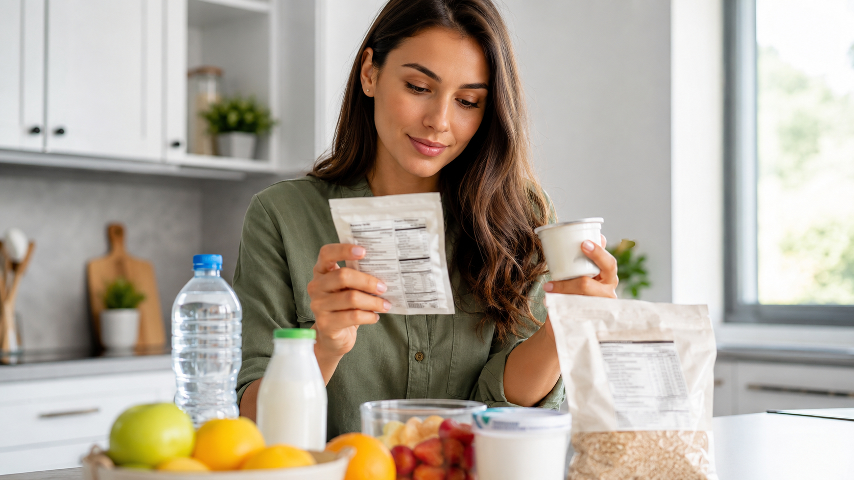
To understand what you are actually buying, you usually need to check just three things: the ingredient list, the nutrition information and the serving size. Once you know where to look, reading a label takes only a few seconds.
“Sugar free” and “no sugar added” are not the same claim
These phrases may sound similar, but they describe different things. “No sugar added” means that sugar has not been added as an ingredient during production. The product may still contain sugars that occur naturally in ingredients such as milk or fruit.
“Sugar free” refers to the sugar content of the product under the applicable food-labeling rules. The exact regulatory definition depends on the market in which the product is sold.
This is why sugar free products are best understood by reading beyond the main claim. The front of the package gives you a useful starting point, while the rest of the label explains the product in more detail.
A simple way to read a label is to follow the same order every time: ingredients first, sugars second, serving size third.
Start with the ingredient list
The ingredient list tells you what the product is made from. This is where you can see sugar, syrups, sweeteners, flavourings and the other ingredients used in the recipe.
If a product tastes sweet, the ingredient list can also help you understand where that sweetness comes from. It may come from sugar, naturally occurring sugars in one of the ingredients, or a high-intensity sweetener.
There is no need to memorise every possible ingredient name. The goal is simply to connect the ingredient list with the nutritional values shown next to it.
Then check the sugars line
The nutrition table tells you how much sugar is present in the quantity stated on the label. This is much more reliable than trying to estimate sugar content from taste.
Always check what the numbers refer to. The values may be listed per 100 g, per 100 ml, per serving or for the product after preparation.
When comparing sugar free products, this detail matters. Two packages may look similar while using completely different serving sizes or preparation instructions.
A sweet product does not necessarily contain sugar
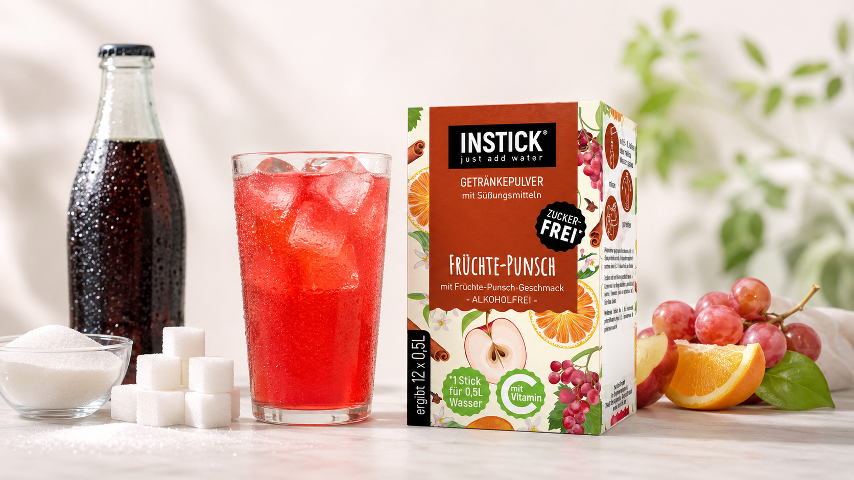
Sweetness and sugar content are different characteristics. Some products use high-intensity sweeteners such as sucralose or acesulfame K to create a sweet taste without ordinary sugar.
This is why sugar free food and drinks can still taste distinctly sweet. The nutrition table tells you how much sugar is present, while the ingredient list helps explain what creates the sweetness.
Taste alone cannot tell you whether a product contains sugar.
What about products with less sugar?
A product with a reduced or relatively low amount of sugar is not automatically the same as a sugar-free product. These are different descriptions, so it is better to compare the actual values rather than rely on similar sounding wording.
The same principle applies to no sugar added foods. A product can have no added sugar and still contain naturally occurring sugars from its ingredients.
Sugar free does not mean carbohydrate free
Sugar is one type of carbohydrate, but the terms are not interchangeable. A product can contain 0 g of sugar while still containing carbohydrates from other ingredients.
If carbohydrate content is important to you, check that line separately in the nutrition table rather than assuming it from the sugar claim.
Five things worth checking before you buy
- The front-of-pack claim. Does it say sugar free, no sugar added or something else?
- The ingredient list. Look for sugar, syrups and sweeteners.
- The sugars line. Check the actual amount shown in the nutrition table.
- The serving size. Find out whether the values refer to 100 ml, 100 g or one serving.
- The preparation method. This is especially important for powders, concentrates and other products that are mixed before use.
Following the same checklist makes comparing sugar free products much easier, even when the products themselves are very different.
Products that need preparation deserve an extra look
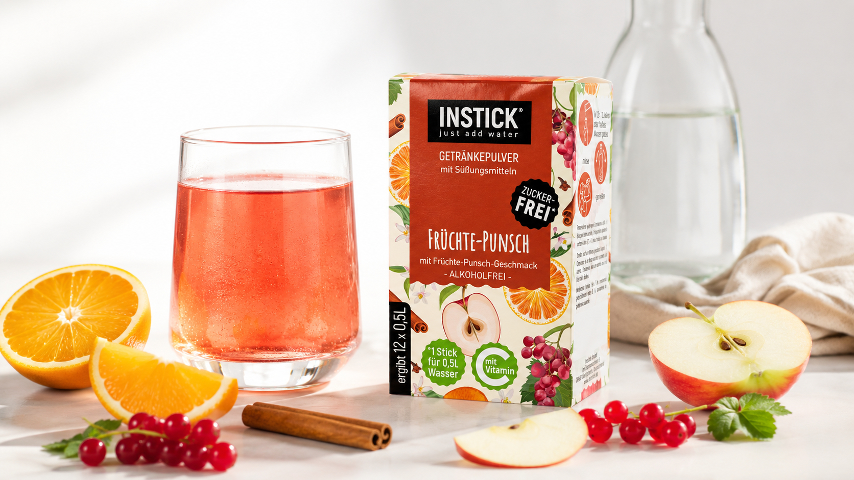
Drink powders are a good example. You buy a dry product, but what you actually consume is the prepared drink.
That means it is important to understand whether the nutrition table refers to the powder itself or to the drink prepared according to the instructions.
If you change the preparation method, the final nutritional values can also change. For example, preparing a product with milk instead of water adds the nutritional values of the milk.
A practical example: INSTICK Lemon
INSTICK Lemon is a sugar-free drink mix. Its sweet taste comes from sucralose and acesulfame K.
The ingredient list also includes citric acid, malic acid, maltodextrin, natural lemon flavouring, gum arabic as a stabiliser, L-ascorbic acid, which is vitamin C, and colouring food ingredients of plant origin.
One stick contains 2.5 g of powder and is designed to prepare 0.5 litres of drink with water. The prepared drink contains 2 kcal and 0 g of sugar per 100 ml. It also provides 6 mg of vitamin C per 100 ml.
This is a useful example of how to read sugar free products: identify what creates the taste, check the nutrition information and make sure you understand the quantity and preparation method the figures refer to.
If the label says 0 g of sugar, do you need to keep reading?
It is still worth taking a quick look. The 0 g figure gives you clear information about sugar, but there are other details you may want to know.
You can check the total energy value, carbohydrates, sweeteners, serving size and other ingredients. These details explain why different products that contain no sugar can still have very different formulations.
In other words, foods with no added sugar and products containing 0 g of sugar should not automatically be treated as nutritionally identical.
Five questions to ask before putting a product in your basket
- What exactly does the package say? Sugar free, no sugar added or another claim?
- What is the product made from? Scan the ingredient list.
- How much sugar is listed? Find the sugars line in the nutrition information.
- What quantity do the numbers refer to? Check the serving size or volume.
- Does the product need preparation? If it does, make sure you know which preparation method the values are based on.
You do not need to study every label from scratch
The easiest approach is to start with the products you buy regularly. Spend a little time comparing your usual drinks, desserts or other packaged foods once, and remember the options that suit you.
After that, shopping becomes much faster. Choosing sugar free products does not have to mean analysing every package in detail each time you visit the store.
The bottom line
Sugar free products can differ widely in their ingredients, carbohydrates, energy value and preparation method. That is why one statement on the front of a package cannot describe the entire product.
Start with the ingredient list, check the amount of sugars, look at the serving size and pay attention to preparation instructions when relevant. Those few steps are usually enough to understand what you are buying and make a choice based on the product itself rather than the packaging alone.
Maya Levi
Content editor at INSTICK Israel. Writes about nutrition in plain language, without jargon or lectures. Mom of two who keep trying to steal her sticks.
All Articles by Maya Levi ←