

Artificial Sweeteners: What’s Really in Sugar-Free Drinks?
A drink can taste distinctly sweet and still contain 0 g of sugar. The explanation is usually found in the ingredient list. Here is how different sweeteners work, what the names on the label mean, and how to tell sweetness apart from actual sugar content.
A sugar-free drink does not have to taste unsweetened. Fruit drinks, iced teas and other beverages can have a noticeable sweet taste while showing 0 g of sugar on the nutrition label. The explanation is usually straightforward: instead of relying on sugar for sweetness, the recipe may use a high-intensity sweetener.
In everyday conversation, these ingredients are often grouped together as artificial sweeteners. In practice, however, it is useful to be more precise. Sucralose and acesulfame potassium are synthetic high-intensity sweeteners, while steviol glycosides are associated with the stevia plant. So rather than treating every artificial sweetener or sugar substitute as the same ingredient, it makes more sense to look at the specific name on the label.
How can a drink taste sweet without sugar?
Table sugar, or sucrose, is only one substance that activates our perception of sweetness. Some other sweeteners are much more intense, which means that far smaller quantities are needed to achieve a comparable level of sweetness.
According to the U.S. Food and Drug Administration, sucralose is about 600 times sweeter than table sugar, while acesulfame potassium, also known as Ace-K, is about 200 times sweeter. Certain steviol glycosides are reported to be approximately 200 to 400 times sweeter than table sugar.
This is why an artificial sweetener is not used as a one-for-one replacement for sugar. A much smaller amount can provide the sweetness needed for a drink or food.
Sweet taste and sugar content are two different things. The ingredient list tells you what creates the sweetness, while the nutrition table tells you how much sugar the product contains.
Source for sweetness intensity: U.S. Food and Drug Administration, “Aspartame and Other Sweeteners in Food.”
What is sucralose?
Sucralose is a high-intensity sweetener used in a range of foods and beverages. Because its sweetness is much stronger than that of sucrose, only a small quantity is needed in a recipe.
On an ingredient list it will normally appear simply as sucralose. It is a separate substance from sugar, so seeing sucralose among the ingredients does not mean that ordinary sugar has been added to the product.
Sucralose is a useful example when explaining how an artificial sweetener works: its role is primarily to provide sweetness, but it is used in a very different quantity from table sugar.
What is acesulfame K?
Acesulfame potassium can appear on a label as acesulfame K, acesulfame potassium or Ace-K. It is another high-intensity sweetener and, according to the FDA, is about 200 times sweeter than table sugar.
It is also common to see acesulfame K used together with another sweetener. This does not mean that a manufacturer is simply trying to make a product “twice as sweet.” Different sweeteners have different sensory characteristics, so combinations can be used to create the intended sweetness profile of a particular recipe.
This is one reason a drink may contain more than one artificial sweetener. Each ingredient forms part of the overall formulation rather than acting as a spoon-for-spoon copy of sugar.
Is stevia an artificial sweetener?
Not in the same sense as sucralose or acesulfame K. The sweet components commonly associated with stevia are called steviol glycosides. The FDA describes steviol glycosides as natural constituents of the leaves of Stevia rebaudiana and discusses high-purity steviol glycosides within its category of plant and fruit based high-intensity sweeteners.
This is why the question “is stevia an artificial sweetener?” needs a little context. Steviol glycosides and synthetic sweeteners can perform a similar job in a recipe by providing intense sweetness, but their origin is different.
People searching for a natural sweetener may therefore come across stevia-based options, while products using sucralose or Ace-K belong to a different group. The most reliable way to know what is actually in a specific product is still to read its ingredient list.
Source: U.S. Food and Drug Administration, “Aspartame and Other Sweeteners in Food.”
Sugar or sugar substitute: what is the practical difference?
From a shopper’s point of view, the key distinction is simple. Sucrose is a carbohydrate and contributes energy to a food or drink. High-intensity sweeteners can provide sweetness in much smaller quantities because their sweetening power is considerably greater.
The phrase sugar substitute is a useful everyday term, but it covers ingredients with different properties and origins. Sucralose, acesulfame K and steviol glycosides should not be treated as if they were identical.
So if the question is “sugar or sugar substitute?”, do not try to work it out from taste alone. Check the nutrition table for the amount of sugars and the ingredient list for the substances used to sweeten the product.
Why do some drinks use more than one sweetener?
Sweeteners are ingredients in a recipe, and each has its own taste characteristics. A manufacturer may combine two sweeteners to achieve the intended sweetness and overall flavour profile.
This is why an artificial sweetener such as sucralose may appear alongside acesulfame K in the same drink. The combination is part of the product formulation, just like acids, flavours, colours or stabilisers.
For a consumer, there is no need to memorise the technical properties of every possible sweetener. Knowing the main names and recognising that they are different ingredients is usually enough to make sense of the label.
How to read the label of a sugar-free drink
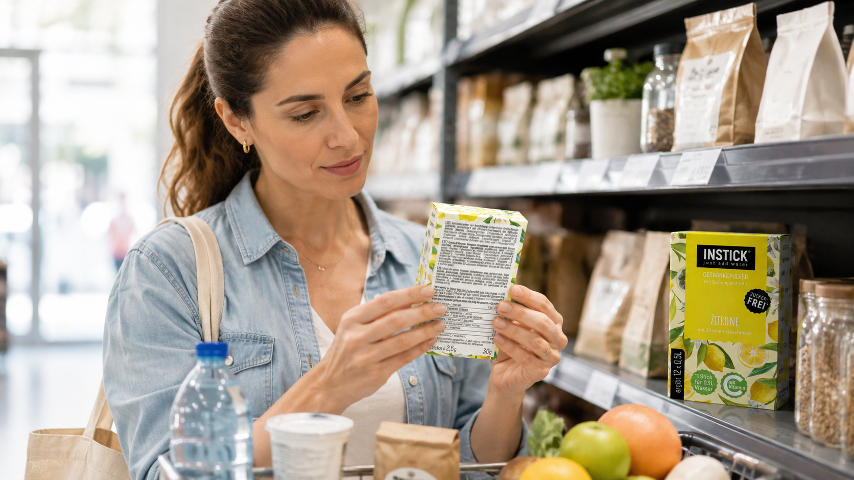
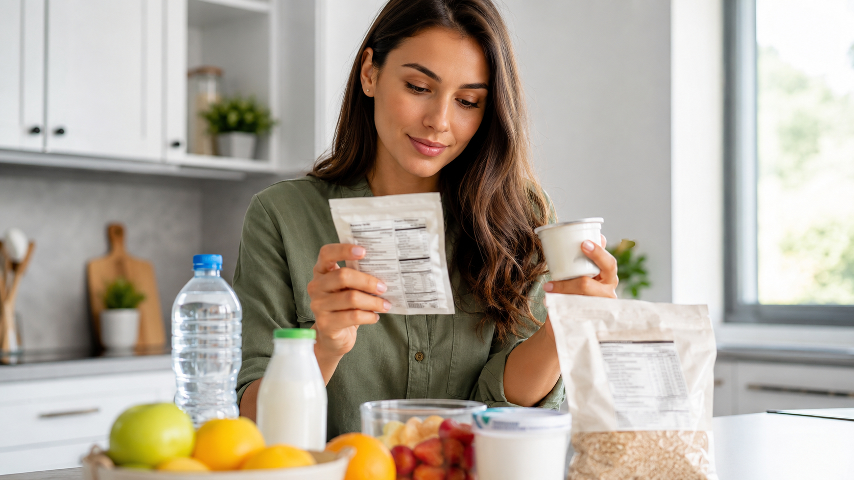
A quick label check becomes much easier if you always follow the same order.
- Read the ingredient list. This tells you which sweeteners and other ingredients are present.
- Find the sugars line. This shows the amount of sugars for the quantity stated in the nutrition table.
- Check the serving basis. Values may be given per 100 ml, per serving or for the prepared drink.
- Look at the preparation instructions. This is especially important for drink powders and concentrates.
- Read beyond the sweetener. A sweetener is only one part of the complete recipe.
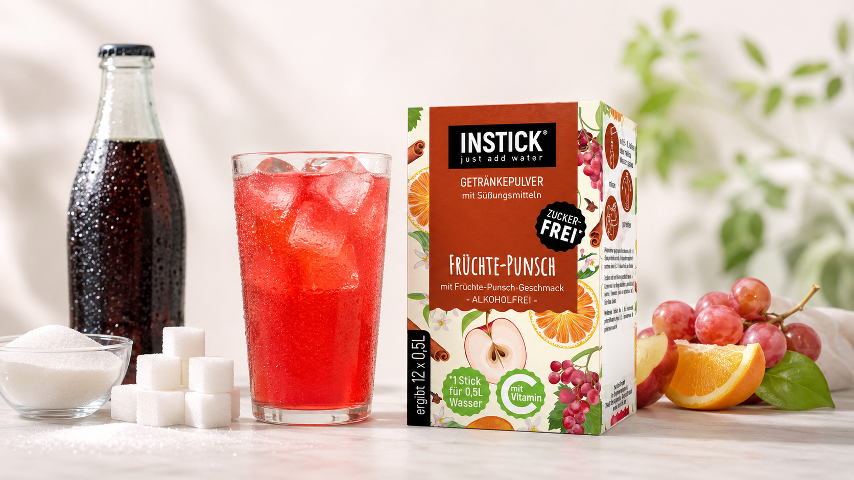
A real example: INSTICK Fruit Punch
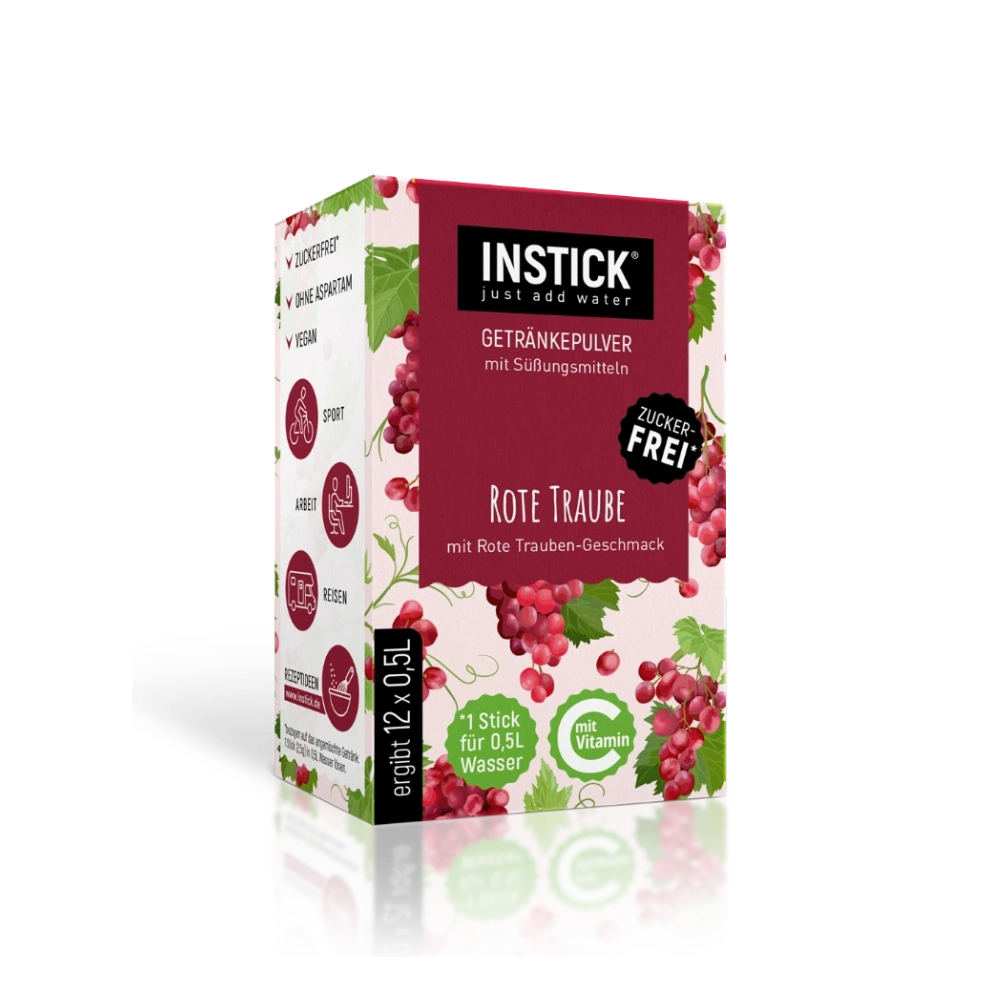
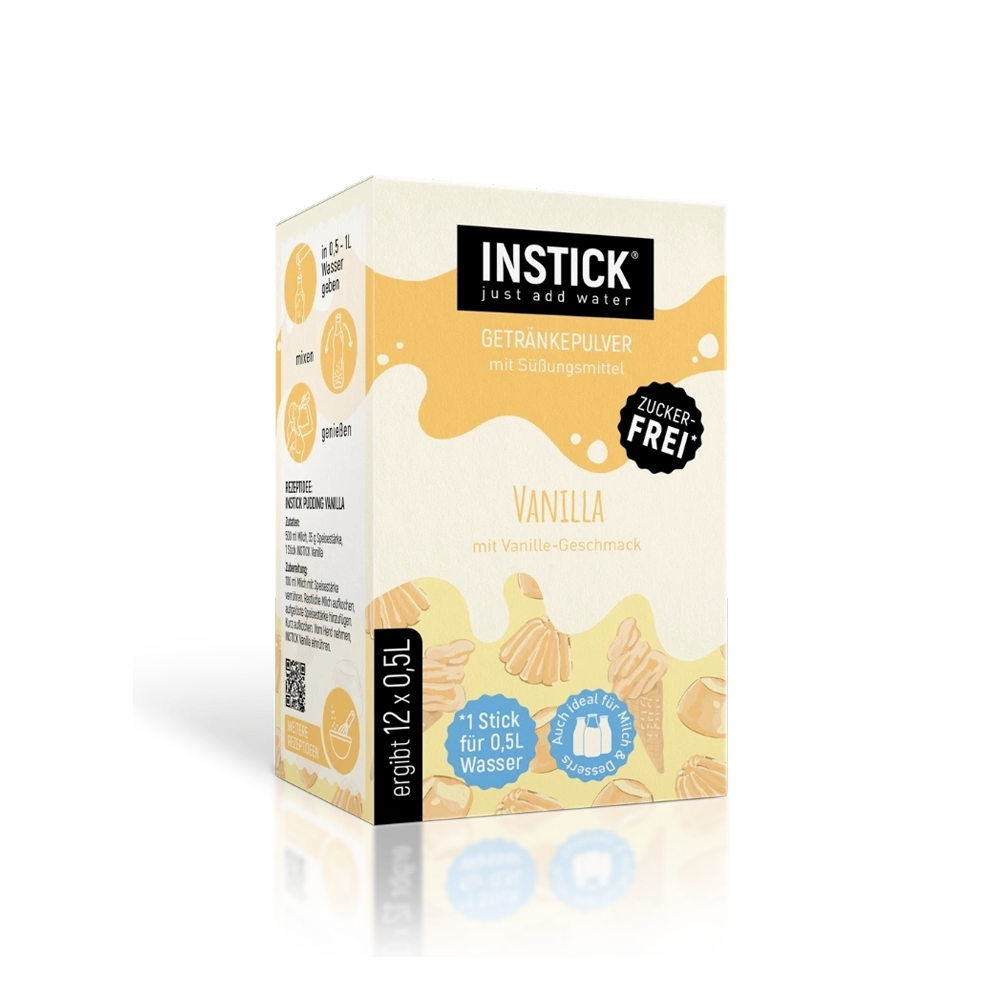
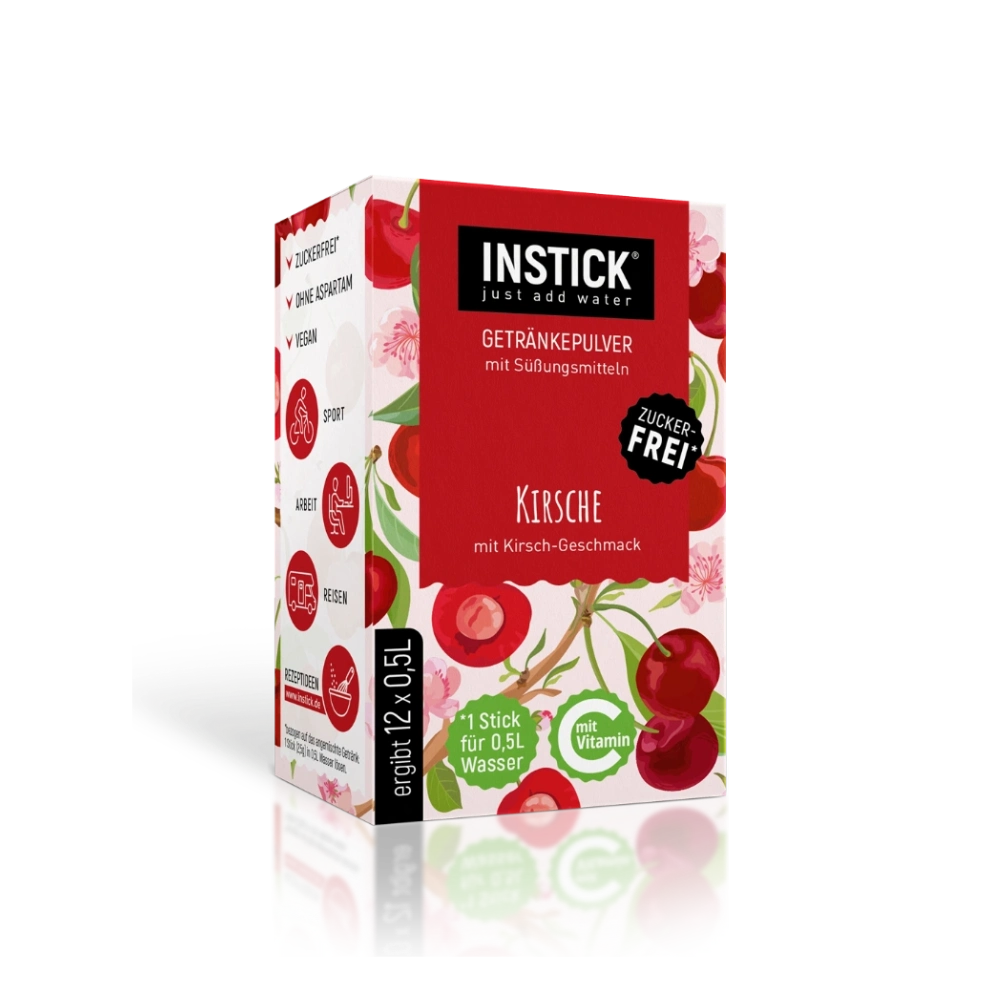
INSTICK Fruit Punch uses two sweeteners: sucralose and acesulfame K. Its ingredient list also includes citric acid, malic acid, maltodextrin, natural flavours, gum arabic as a stabiliser, colouring food ingredients from black carrot and safflower, and L-ascorbic acid, which is vitamin C.
Steviol glycosides are not listed as an ingredient in this product. This is a useful example of why knowing the different types of sugar substitute is not enough on its own. The specific label tells you exactly which ingredients have been used in that particular recipe.
One stick contains 2.5 g of powder and is designed to prepare 0.5 litres of drink with water. The prepared drink contains 2 kcal and 0 g of sugar per 100 ml. That works out to 10 kcal and 0 g of sugar in the full 500 ml prepared drink.
Why can 0 g of sugar still taste sweet?
This product illustrates the difference between sweetness and sugar content very clearly. Sweetness does not require sucrose if another ingredient is being used to create the sweet taste.
In this case, sucralose and acesulfame K perform that role. Because each artificial sweetener is highly intense, only a small amount is needed as part of the formulation.
So there is no contradiction between a drink tasting sweet and the nutrition table showing 0 g of sugar. One describes sensory experience; the other describes nutritional composition.
Do you need to know every type of sweetener?
Not really. For everyday shopping, a few simple principles are enough.
- Do not judge sugar content by taste. A sweet product may contain no sugar.
- Look for specific names. Sucralose, acesulfame K and steviol glycosides are different ingredients.
- Keep the terms separate. Sugar, sweeteners and carbohydrates are not interchangeable terms.
- Check the prepared product. With drink powders, preparation instructions matter.
- Read the whole label. “Sugar-free” is useful information, but it does not replace the ingredient list or nutrition table.
The bottom line
An artificial sweetener can provide a sweet taste without requiring the amount of sugar that would otherwise be needed for a similar level of sweetness. Sucralose and acesulfame K are examples of synthetic high-intensity sweeteners, while steviol glycosides belong to a different, plant-associated group.
The easiest way to understand a sugar-free drink is therefore not to guess from its taste or rely on one large claim on the front of the pack. Read the ingredient list, identify the sweetener, check the sugars line and look at the preparation instructions. That gives you a much clearer picture of what is actually in your drink.
Maya Levi
Content editor at INSTICK Israel. Writes about nutrition in plain language, without jargon or lectures. Mom of two who keep trying to steal her sticks.
All Articles by Maya Levi ←